Two weeks ago I ran a 180B model on a mini PC with an 8 GB card and ended with some advice: if you have a similar setup and a GPU in your shopping cart, try this first.
Then I bought a GPU.
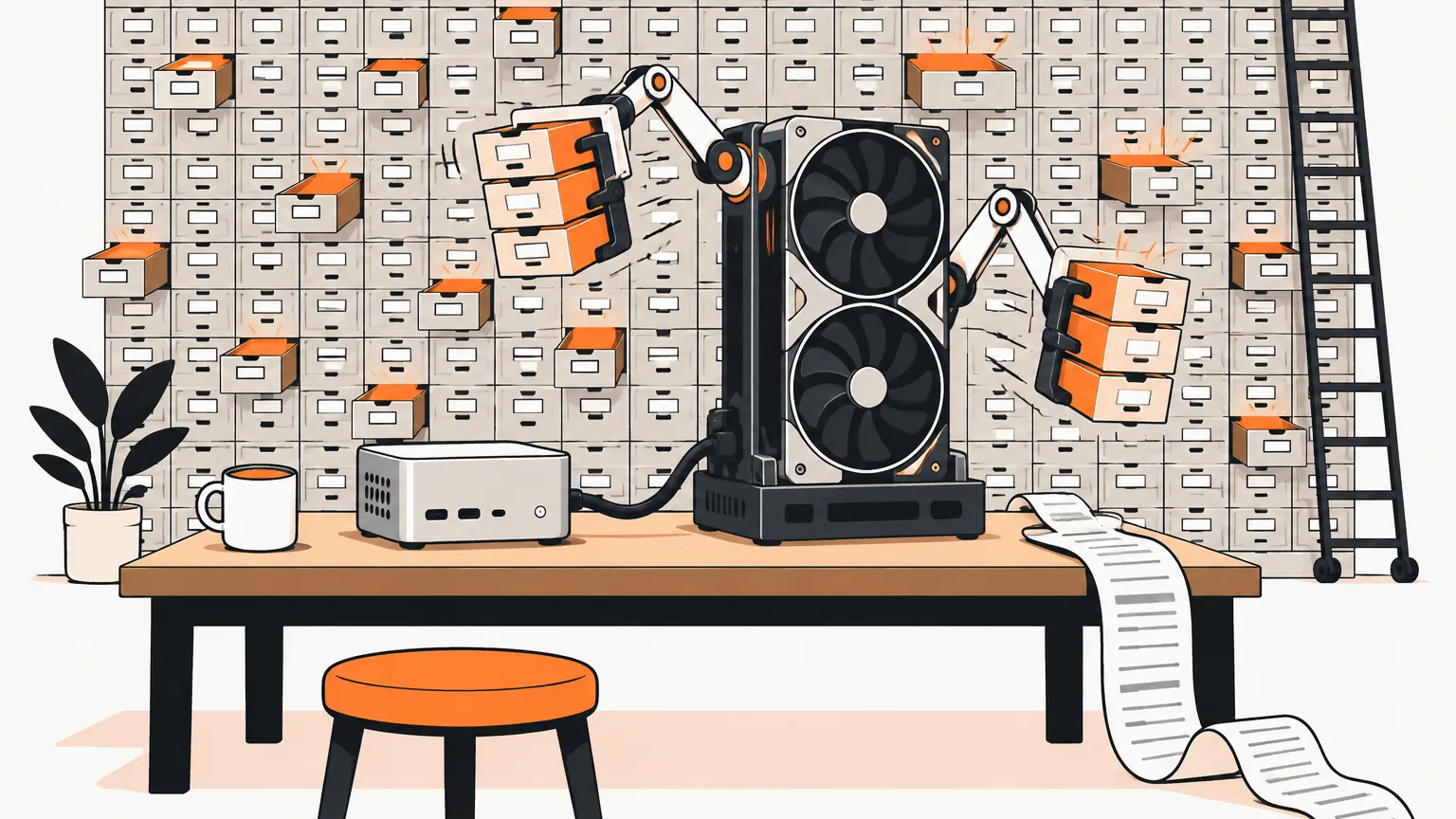
The machine: the same Minisforum mini PC (Ryzen 7 8845HS, 64 GB of RAM), the same OCuLink cable (PCIe Gen 4 x4). The RTX 3060 Ti 8 GB is gone. In its place: an RTX 3080 whose memory was upgraded to 20 GB, which is what happens when a workshop decides NVIDIA’s spec sheet was more of a suggestion.
The model: still Qwen3.8-Flash-Next, 180 billion parameters, 2-bit, run with Strata 0.2.9.
The speed:
| Test | 8 GB card (October) | 20 GB card (today) |
|---|---|---|
| Reading a long prompt | ~390 tokens/s | ~2,000 tokens/s |
| Reading 162,000 tokens | did not fit | 2,395 tokens/s (68 s) |
| Writing prose (short poem, then 600-word essay) | 52-57 tokens/s | 110 tokens/s |
| Writing new code | not measured | 166 tokens/s |
| Rewriting a file (same prompt) | 82 tokens/s | 187-204 tokens/s |
| Context window | 64k tokens | 262k tokens |
The first turn of a Claude Code session is about 36,000 tokens of instructions and files. The 8 GB card needed about a minute and a half to read it. The 20 GB card reads it in 18 seconds, then writes faster than my terminal scrolls.
Everything is documented, with the exact config, dated benchmark files and the scripts to reproduce it: emoubarak/strata-flash-next-rtx3080-20gb.

Why 12 more gigabytes change everything
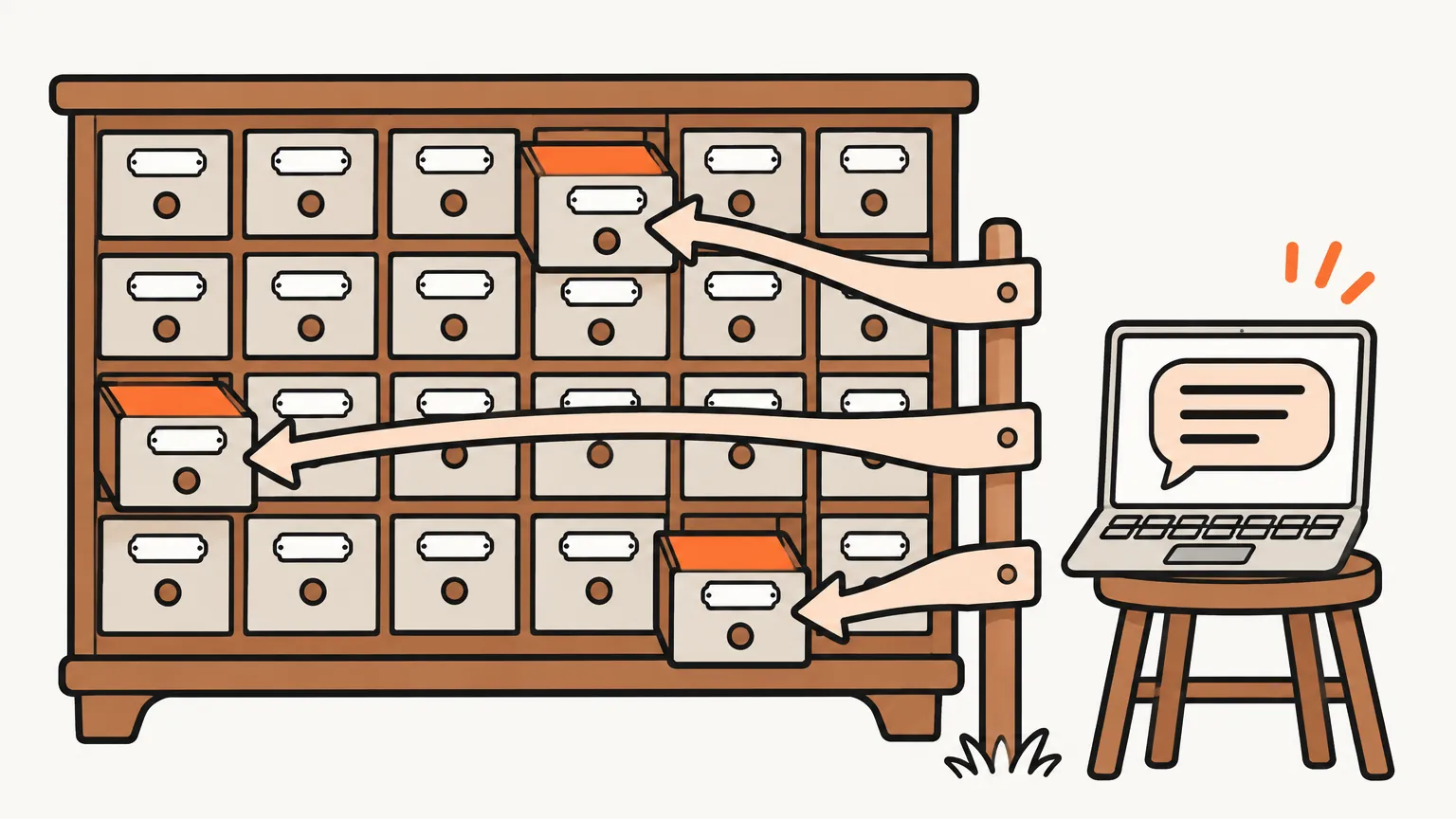
Qwen3.8-Flash-Next is a committee of 24,576 small experts, and each token only consults a handful. The whole game is having the right experts on the card when they are needed.
The 8 GB card held about 800 of them. The 20 GB card holds about 9,700. While writing, the expert the model wants is already on the card more than 9 times out of 10, so the CPU barely helps anymore. While reading a long prompt, far fewer experts cross the cable, and the card holds the speed as the prompt grows: 15,000 tokens or 162,000, it stays around 2,000 tokens per second.
The rest is memory bandwidth: 721 GB/s measured on this card, which is what writing speed actually depends on.
My settings
Strata’s calibration on the new card kept its own defaults, so the settings I tuned for the 8 GB card went in the bin. What I kept, each one measured on this machine:
| Setting | What it does | Gain |
|---|---|---|
--prefill 16384 | reads the prompt in chunks of 16,384 tokens | reading +28 to +47% |
--spec 4 + the MTP head | guesses 4 tokens ahead, keeps the right ones | writing +37 to +51% |
--kv-resident 32768 | 262k context: 32k tokens of memory on the card, the rest in RAM | −5 to −9% reading, 2× the window |
--conversation-cache-slots 4 | parks up to 4 conversations in 8 GB of RAM | Claude Code with sub-agents twice as fast (68 s → 35 s) |
STRATA_KV_PREFETCH=1 | uploads the next layer’s memory while the current one computes | reading +2.5 to +4.8% |
STRATA_PREFILL_CPU_SHARE=1 | lets the CPU compute the experts that are not on the card | writing +2 to +8% |
STRATA_ROUTE_TAIL_SKIP=4 | skips an absent expert when every token ranks it 4th or worse | writing +7 to +16% |
| gpu-unlock | kernel module that lifts the half-speed FP16 limit on GeForce cards | reading +16 to +19% |
Two of those deserve a note. ROUTE_TAIL_SKIP is a dial, not a switch: lower values skip more experts and write faster, and 4 is the lowest value that still scored exactly like the default on a freshly started server. And gpu-unlock is a kernel module that removes a speed limit NVIDIA put on its gaming cards. Same accuracy, a sixth faster reading, one reboot.
Fast, and still right
Speed settings that skip work are only worth it if the answers survive, so I checked on the final config:
- 40 two-digit multiplications, right after start, no thinking: 38/40, the same two misses as with the default settings.
- My agent’s 20-decision exam, 4 runs: 36/40, the same single case missed every time.
- Tool calls in both the OpenAI and Anthropic formats, the two formats Claude Code and OpenCode speak.
What you need to try it
- RAM: 64 GB. Strata keeps about 41-45 GB of experts in memory.
- GPU: an NVIDIA card with 20 GB or more. Inside the case or on an eGPU; Gen 4 x4 is enough.
- Disk: about 66 GB for the model files.
- Time: one download, one build, one calibration, four environment variables. The repo lists the commands in order.
So, should you buy the GPU?
In my defense, the software kept its promise. In two weeks: about twenty Strata releases, one kernel module and a few environment variables, on top of the card. The same mini PC now reads five times faster and writes twice as fast as when I told you not to upgrade.
So the advice stands, with an update: try the config first. Then buy the card. Then try the config again.